
The French AI Report 2026: from models to medicine and defence
The French AI Report 2026: from models to medicine and defence
Notes from our evening at Google France: the state of France’s AI startup ecosystem, growing tumours in the lab, bringing AI into hospitals, and building defence companies.
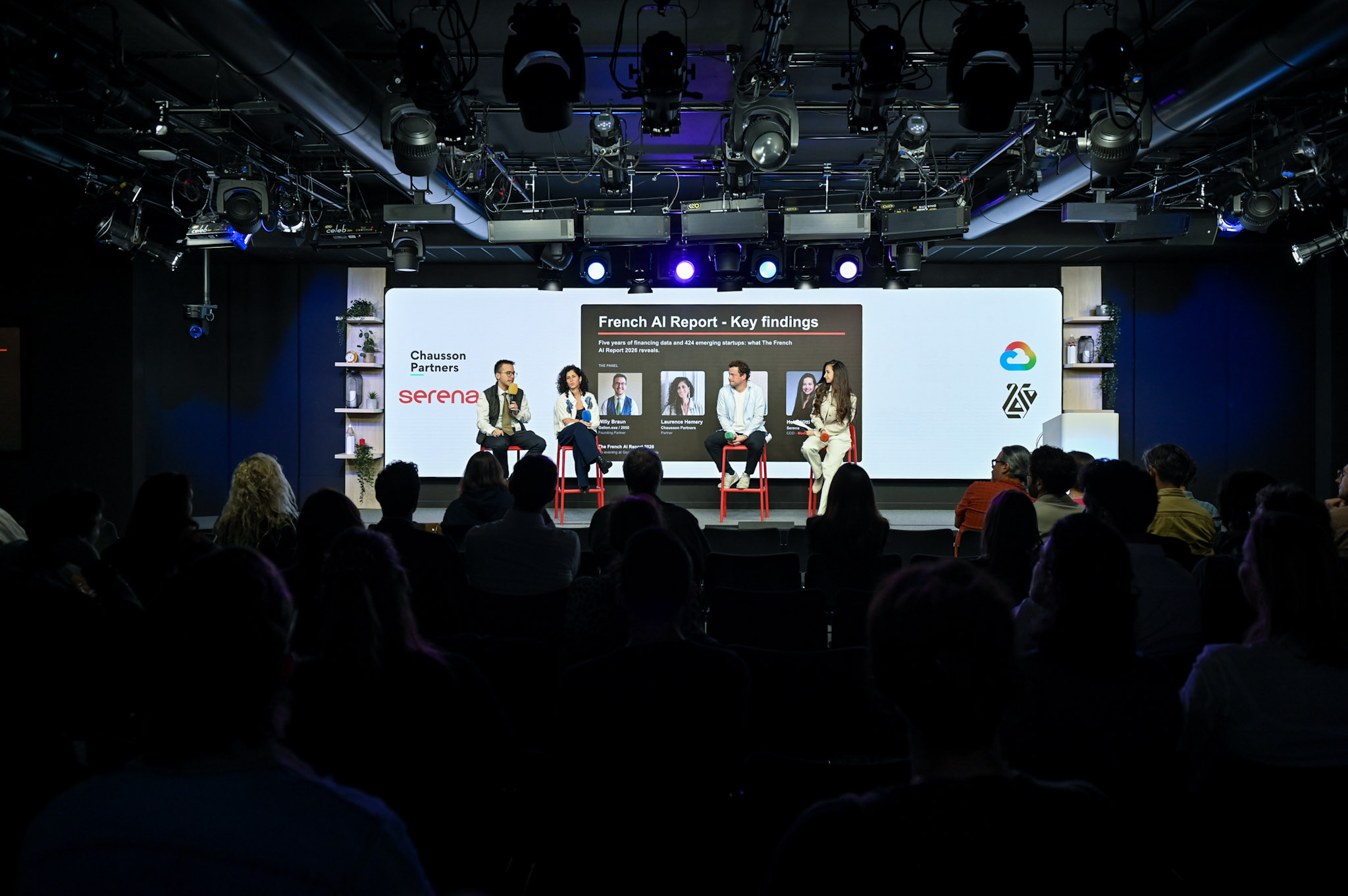
On 14 October, we gathered at Google France in Paris for the second edition of The French AI Report, produced by Chausson Partners, Galion.exe and Serena, with Google Cloud as our partner. The evening moved from the financing of French AI to two fields where the technology has to prove itself: health and defence.
A special thank you to Google Cloud, our partner for the report and host for the evening, to Cyrille Saint Olive, and to Kathryn Van Nuys, Global Director, Venture Capital and Startup Partners at Google Cloud. Thank you also to the team, Louis Soboul, Gaëlle Pitaud and Chamse-Edine Sayagh, for making the evening possible, and to Chausson Partners and Serena for our work together on the report.
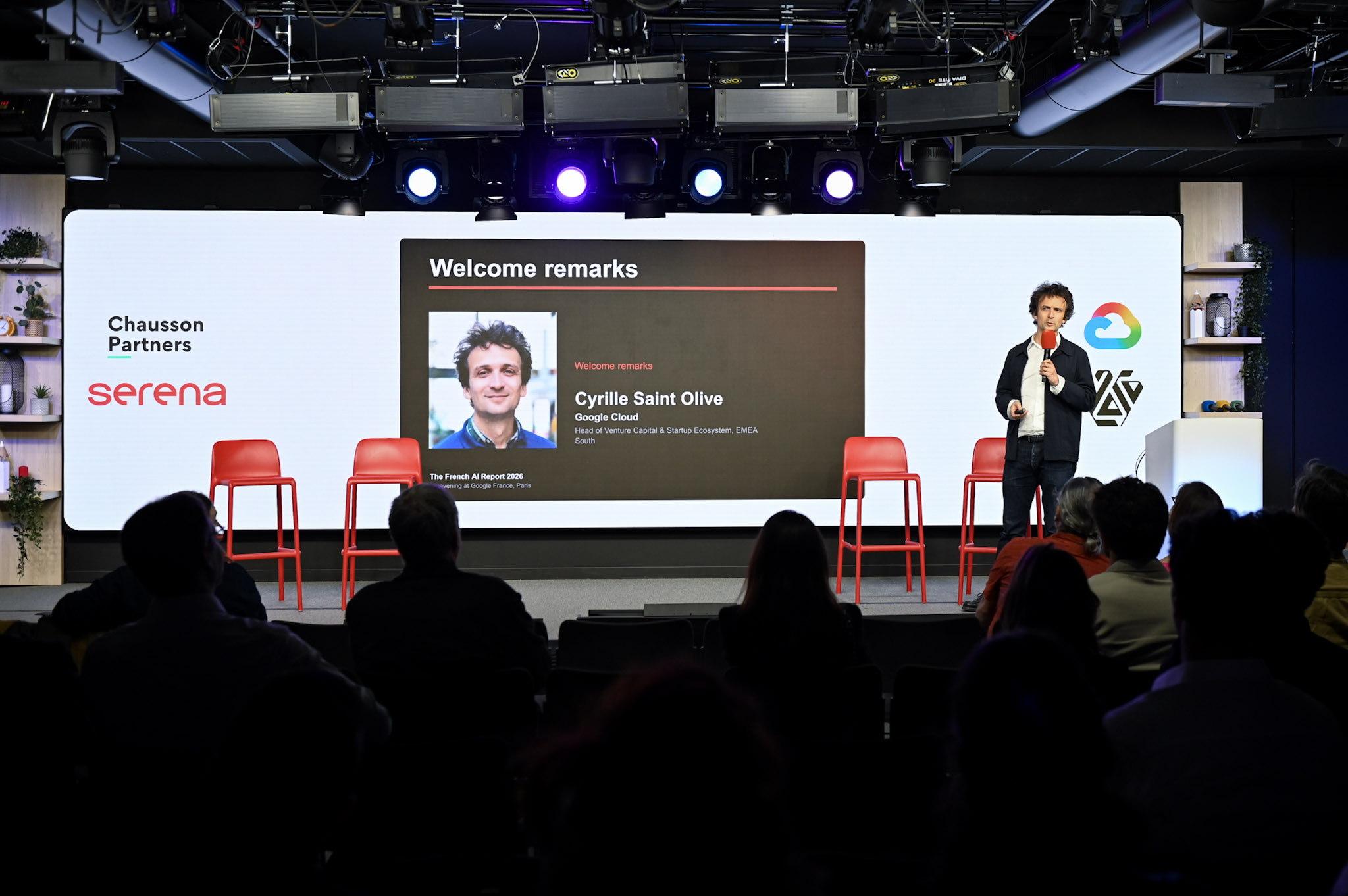
1. French AI: established champions and the next generation
I joined Laurence Hémery of Chausson Partners and Sébastien Le Roy of Serena for the opening panel, moderated by Heba Hitti of Serena.
1.1. Financing champions and a broad ecosystem
France attracted €3.5bn in AI venture funding in 2025, behind the UK’s €7.1bn and just ahead of Germany’s €3.4bn.1
Europe has the founders; financing their growth is harder. Europe and the US each produce roughly 900 new AI startups backed by VC each year, yet US companies raised nearly 12 times more capital at later stages in 2025: $141bn versus $12bn.2 European champions need access to much larger pools of capital to compete with the best funded companies in the world.
My argument was that we need the capacity to finance our champions and a broad base of experiments, early teams and first customers. In an increasingly concentrated market, raising more money overall does not guarantee that both happen. French AI funding rose from €2.4bn in 2024 to €3.5bn in 2025, while AI seed funding fell from €365m to €182m. Very large seed rounds can absorb capital and attention before the rest of the ecosystem has had a chance to prove itself. Herding compounds the problem when investors pursue the same names and overlook less fashionable scientific bets. Funding today’s champions should go hand in hand with giving tomorrow’s a chance to emerge. A fertile ecosystem needs both its champions and that diversity.
Raising more capital is no longer the default ambition for every founder. Laurence Hémery described both a higher funding bar and founders reconsidering the VC route itself. Some choose frugality; others consider an acquisition earlier. Her account of exits shows a similar polarisation: a few very large transactions coexist with acquisitions of companies that have raised relatively little. Startups are also becoming buyers, creating another route for technology and teams to find a market.
Fast revenue growth needs to be tested against retention and durability. Sébastien Le Roy questioned the quality of revenue in rapidly growing AI applications, where churn and improvements in underlying models can weaken an early lead. The argument is to turn scientific strength into commercial leadership across applications and deeper technology.
1.2. Founder mafias and the talent flywheel
France is beginning to develop its own AI founder “mafias”. I also traced where the next generation of founders is coming from: Google, Meta, IBM, Microsoft and Parrot, but also from large French organisations such as Orange, BNP Paribas and Société Générale. These backgrounds bring different kinds of experience: research, product development, industrial systems and access to customers in complex markets.
A second generation is emerging from companies built by the French tech ecosystem itself. We are starting to see successive waves from Criteo, Qonto, Swile, Back Market, Owkin, Dreem, Alan and Doctolib. People leave with practical experience, trusted collaborators and a better sense of which problems customers will pay to solve. These networks also produce business angels who bring knowledge and access alongside their money. Experienced founders and operators help young companies recruit, reach their first customers and avoid familiar mistakes. Together they create a talent flywheel: successful companies produce founders, teams and angels who reinvest their skills, networks and capital in the next generation.
1.3. Hard AI and the next wave of champions
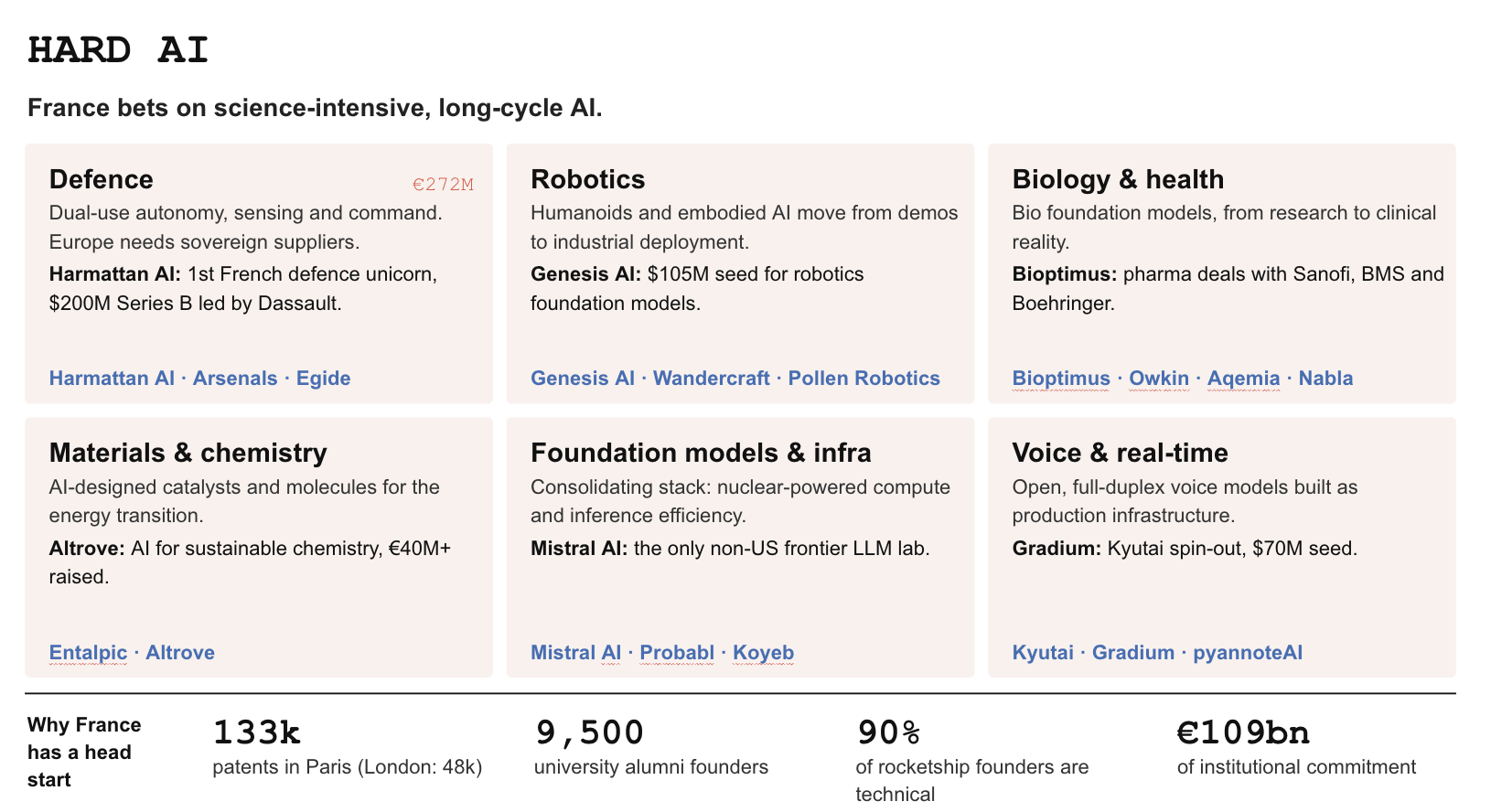
France’s depth in scientific research and engineering can give it a lasting competitive edge in Hard AI: biology, robotics, defence, materials and other fields where progress depends on experiments or physical systems. The work creates assets that a better general model does not supply on its own: measured biological responses, evidence for regulatory clearance, reliable equipment and integration into industrial operations. The advantage comes from owning the evidence and the ability to deliver, not from technical difficulty alone. Those assets take time and capital to build; they become commercially valuable when they improve a customer’s outcome and would be costly for another supplier to reproduce.
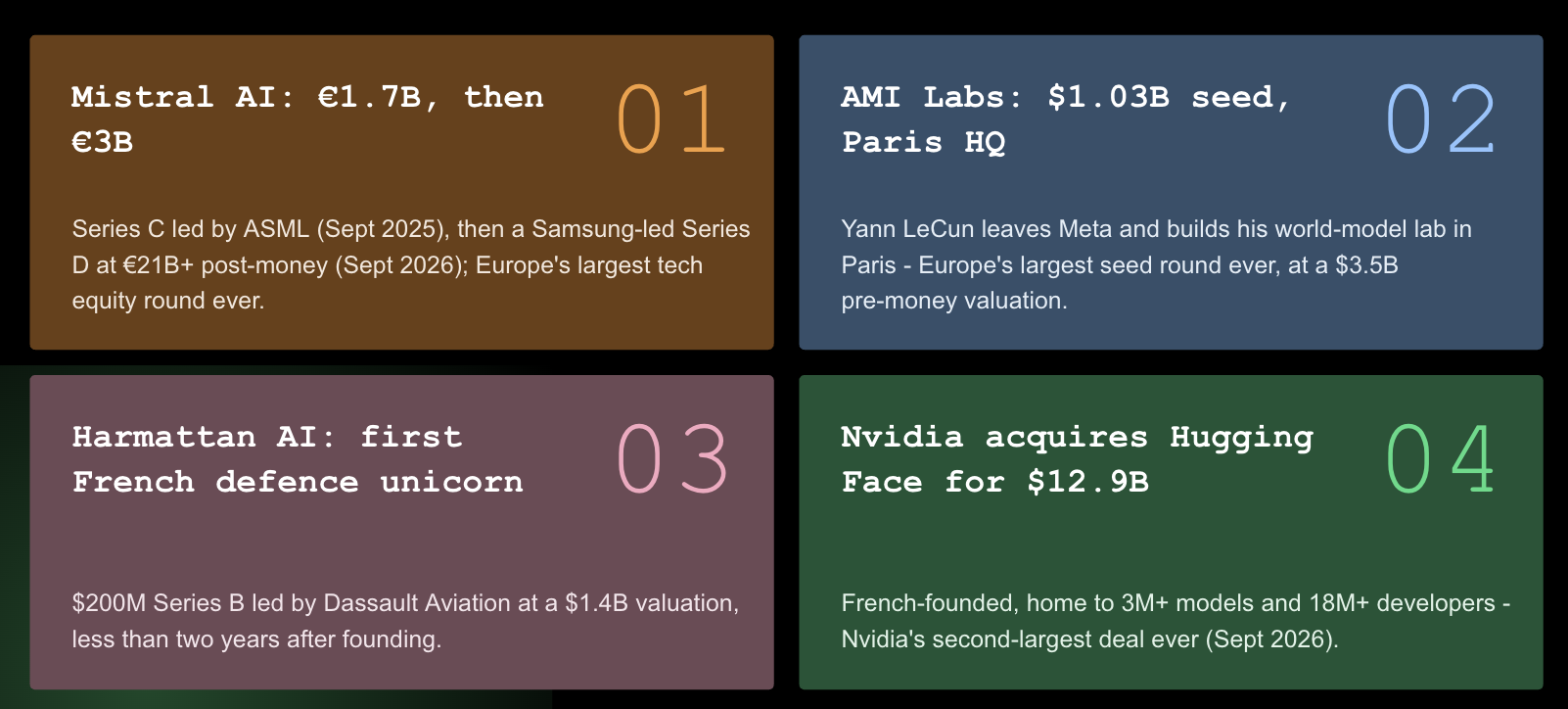
France’s AI champions are being joined by a new wave in Hard AI. Hugging Face, Mistral AI, AMI Labs and Harmattan AI illustrate the country’s ambition across the developer ecosystem, foundation models and defence. Biology, robotics and materials could now produce more companies of comparable ambition.
The next wave of champions could come from a much broader range of fields. Examples include Entalpic and Altrove in chemistry and materials; Lithosquare in critical mineral exploration; Living Models, One Biosciences, Orakl Oncology, Aqemia, Generare and Rivercell across biology and drug discovery; Raidium in medical imaging; Genesis AI in robotics; Robeauté in neurosurgical microrobotics; and Gradium in voice.
Solving the practical problems of deployment can also produce the next French champions. This includes deep infrastructure engineering: ZML builds inference software close to the hardware, aiming to run models efficiently across different processors. .txt works on structured model outputs, and 2501 develops agents for IT operations and incident response. Resilience matters too: Astran helps organisations keep essential processes running when their main systems fail. Jimini and Vizzia address the demands of legal work and local authorities. These businesses tackle what stands between a capable model and a service customers can rely on.
Turning that scientific potential into companies requires capital that can fund the years between research and commercial use. The financing discussion covered a mix of venture capital, industrial investors, public funding and procurement. Industrial partners can bring customers and production expertise as well as money. Longer development cycles make the terms and timing of that support as consequential as the amount raised.
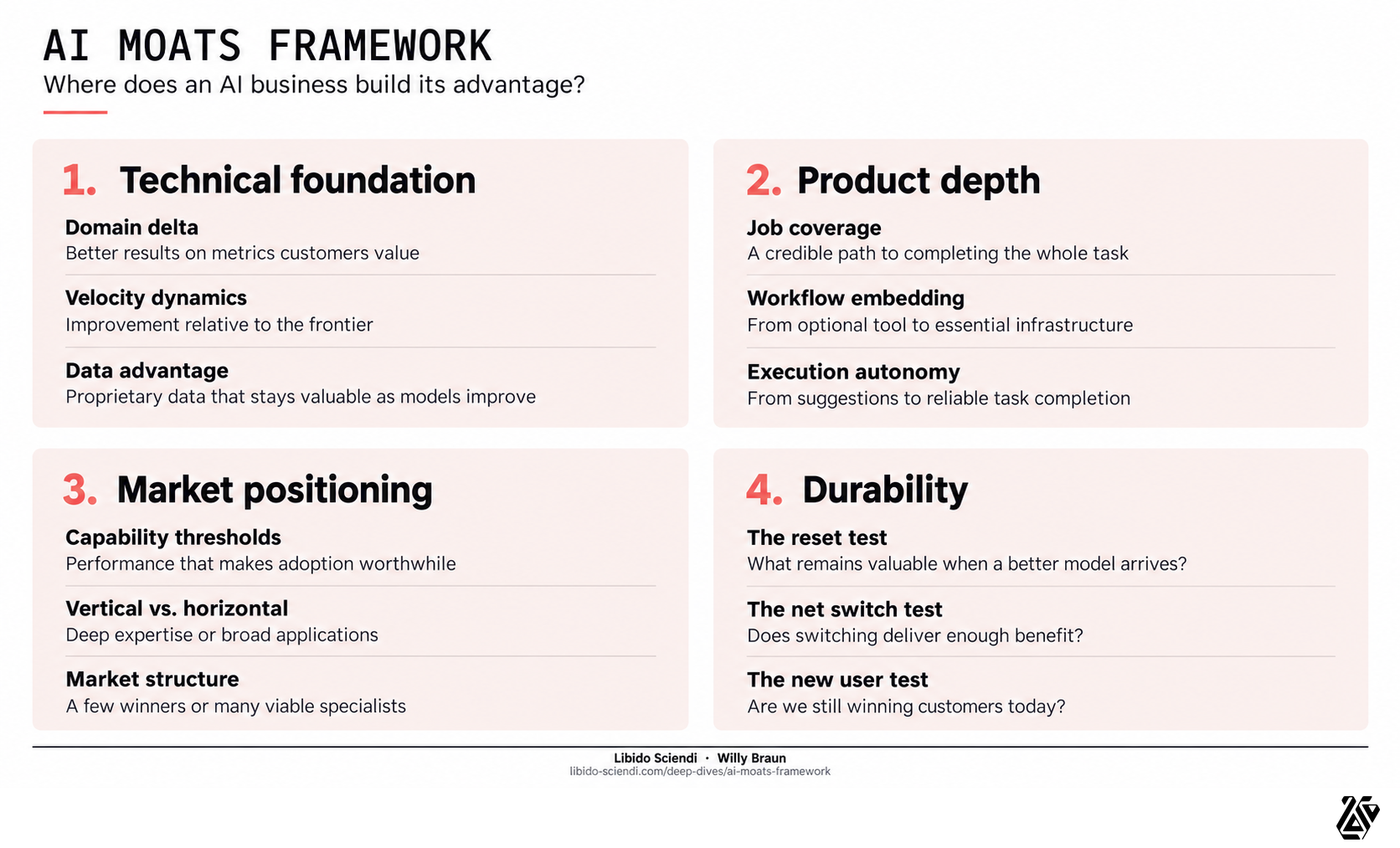
Over those longer development cycles, the underlying models will keep changing. Better general models can help a specialist company while eroding part of what it sells. My question was how much of the customer’s problem remains unsolved when the model improves. In drug discovery, someone still has to choose and run experiments. In radiology, someone has to validate the system and fit it into clinical practice. Those responsibilities give specialists room to build a business, provided they deliver results that customers cannot get from the model alone.
This is the question behind my framework for AI competitive advantage: what remains valuable when the underlying models improve? The health and defence panels gave us concrete examples of data, products and customer relationships that might survive that change.
2. AI × Health
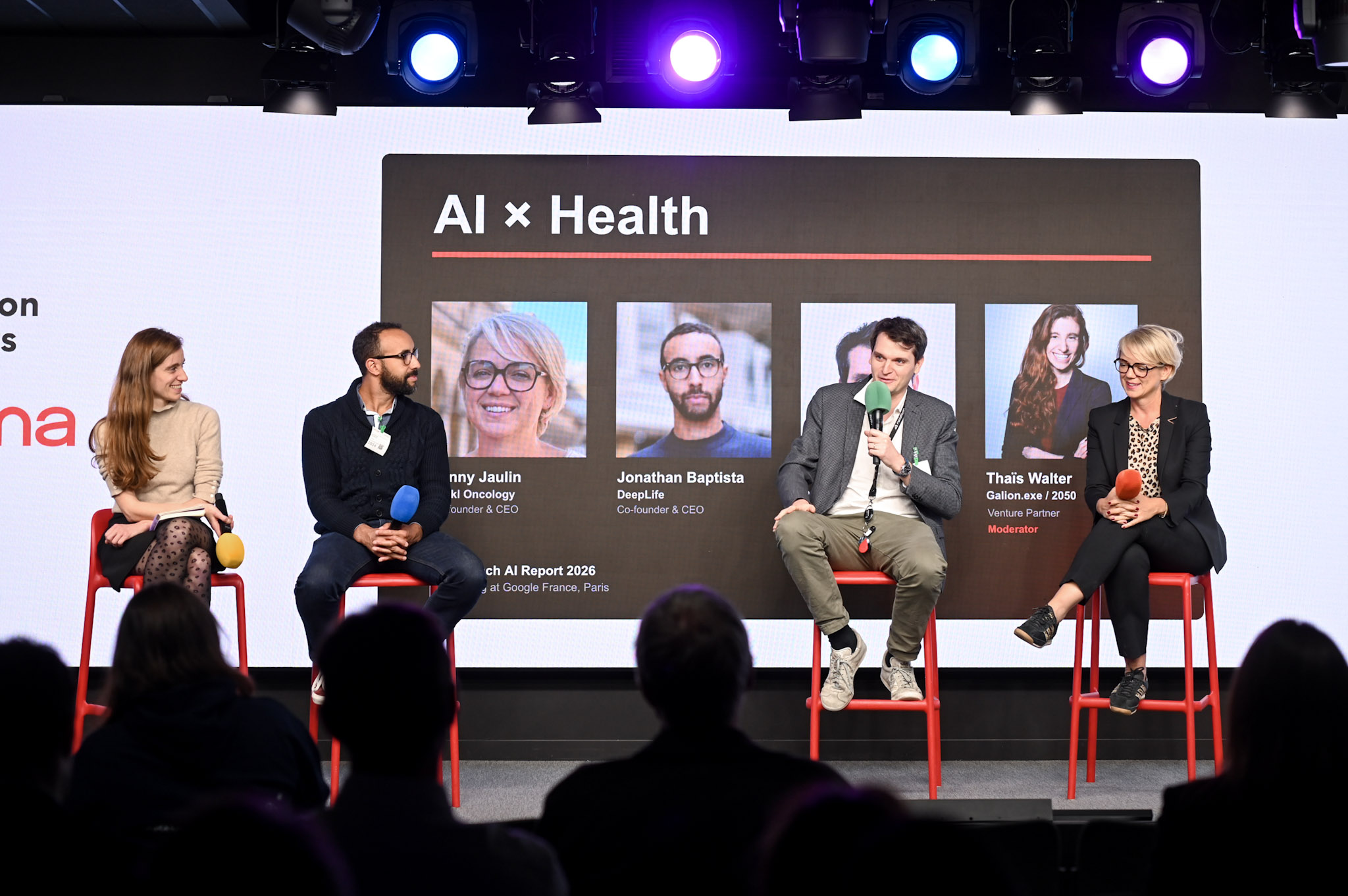
Thaïs Walter, an intensive care clinician and venture partner at Galion.exe, moderated Jonathan Baptista of DeepLife, Fanny Jaulin of Orakl Oncology and Pierre Manceron of Raidium. Two different questions ran through the discussion: how AI helps develop drugs, and how it changes care.
2.1. Drug discovery: generating the evidence a model needs
Jonathan began with a problem upstream of drug design: finding new biological targets. New ways of delivering a treatment can still act on familiar targets. DeepLife’s ambition is to model how cells respond to interventions, identify disease mechanisms and suggest where to intervene. Turning that ambition into a medicine requires a reliable drug development platform and a clear path to a best-in-class treatment.
Founders increasingly want a share of the drug’s value as well as revenue from the platform. Supplying predictions or candidates can generate fees while a partnership also secures shared intellectual property, milestones or royalties on the resulting therapeutic asset. These models can coexist. The ambition is to retain some of the upside from a successful medicine rather than be paid only for the work that helped discover it. How much value the company can retain depends on what it contributes and how much development cost and clinical risk it is prepared to share.
AI is already shortening parts of drug discovery; the remaining question is how reliably those gains translate into successful medicines. Insilico Medicine reported reaching a preclinical candidate for its fibrosis programme in under 18 months, on a budget of about $2.6 million. Across its programmes, the company reports 12 to 18 months to candidate nomination, compared with roughly 4.5 years for traditional discovery.3
The clinical pipeline now extends well beyond one flagship molecule. An industry analysis published in October 2026 identified 129 AI-enabled therapeutic assets across 69 companies, using data through 1 March 2026. Twenty-four had completed phase 2, and five had entered or completed phase 3. The category includes drugs discovered or developed with different forms of AI, not only molecules designed by generative models. Completing a trial does not mean it succeeded, but these numbers show that the field is now being tested in patients across a substantial set of programmes.
That clinical progress also raises the question of what better molecular design can already do for safety. Improving efficacy and selectivity is already a valuable start, even before we can fully predict toxicity. Fanny described encouraging observations of lower toxicity in highly selective candidates discovered with AI: designing molecules that act more precisely on the intended target can reduce unwanted interactions elsewhere. Some safety gains may therefore come from better design upfront, without a complete model of the biological response. A selective molecule can still harm healthy tissues through its intended target, so safety still has to be tested.4
Designing a better molecule and establishing that it will work in patients are different problems. Fanny explained how Orakl addresses biological risk using tumour organoids grown from patient cells: miniature tumour cultures derived from biopsies or surgery. These living models can be multiplied and maintained over time, allowing repeated experiments on material derived from the same patient. This makes each established culture a renewable source of experimental data. The team exposes them to panels of drugs and combines the measured responses with clinical and molecular data. Fanny described testing around a hundred treatments in the lab, something one cannot do in a single patient.
Generating experimental data is part of building the model. Orakl can ask an experimental question, measure a response, and feed the result back into its models. Jonathan described the same need for perturbation data: change something in a cell, such as a gene’s activity, and observe the consequences. Observations of untreated cells alone cannot answer every question about what a treatment will do.
Understanding those responses also requires looking at biology in finer detail. In our portfolio, ORIA Bioscience isolates functionally intact organelles to study biological activity and drug effects inside the cell. At the level of individual cells, One Biosciences combines sequencing and AI to reveal differences that measurements averaged across a tissue can hide, with the aim of improving patient selection and treatment development. Both help researchers understand which parts of a living system drive a response, so they can choose more precisely what to target and test.
This connects to my earlier piece on biological models and the noise floor. Model comparisons mean little without a well defined task and measurements good enough to distinguish progress from noise. For these companies, access to patient material, the choice of experiments and the quality of the measurements are part of the technology. Choosing what to measure determines what the model can learn. The scientific judgement lies in designing experiments that distinguish between competing explanations of a disease or a drug response, so that better predictions can lead to better decisions about which treatments to develop.
2.2. AI × care: useful models, awkward routes into practice
Thaïs’s account of clinical practice was more mixed. The AI scribes she had tried remained disappointing in intensive care, where a predefined consultation template struggles with complex cases. Yet she also described clinicians increasingly turning to general models for difficult questions, including clinical questions from her own practice without a definitive answer. Some of this use happens unofficially, outside formally approved hospital workflows, rather than through a product cleared for that clinical purpose. Formal product adoption and everyday use are moving at different speeds.
Radiologists face a growing mismatch between the work to be done and the capacity to do it. Onstage, Pierre Manceron, Raidium’s technical cofounder and co-CEO, described the prospect of a shortage of radiologists alongside a transformation of their daily work: more examinations to interpret, with increasingly precise scanners producing more detailed images and more complex readings. The ambition is to expand access to radiology while improving the standard of care and how practitioners work. Tools that help radiologists navigate that detail, compare examinations and produce reports can give them more time for clinical interpretation as demand grows.
For established tasks in medical imaging, the question has moved beyond whether AI can work to how clinicians can trust and use it. Raidium reports state of the art results for its foundation model Jolia on findings classification across four chest and abdominal CT datasets covering 252 abnormalities, and on four of six clinical metrics for abdominal report generation.
Raidium’s strategic bet is to embed its models in the viewer, where radiologists already do their work. Its cofounder Paul Hérent is a radiologist, and that clinical perspective is reflected in the product: detection, measurement, comparison and reporting within the imaging workflow, with the ambition of a unified viewer. The value comes from helping the doctor complete the examination, not adding another isolated prediction to review. Regulatory clearance remains a major part of bringing those capabilities into routine care.
Regulation has to accommodate products that keep improving after they reach the clinic. At the time of the conference, the FDA was seeking input from manufacturers, clinicians and researchers on its approach to generative AI medical devices, including evaluation before release and monitoring afterwards, with responses due on 19 October 2026. Its existing predetermined change control plans already allow specified updates without a new marketing submission for each one, provided the changes and their validation fall within the authorised plan. The challenge is to let useful improvements reach clinicians faster while retaining evidence that each version is safe and effective.
Specialists compete with an alternative that doctors can access immediately. A specialist product may perform well on a defined clinical task yet still have to complete validation, regulatory and hospital deployment work before it reaches users. Meanwhile, general models are already being used informally in everyday practice. Their availability drives adoption even though that use does not establish clinical safety or validity.
Specialists need an advantage that survives both deployment constraints and progress in general models. That means better results on the clinical task, a practical way into the workflow, and the ability to incorporate improvements from general models themselves. Regulatory requirements shape that route to market; they do not make informal alternatives disappear.
3. AI × Defence
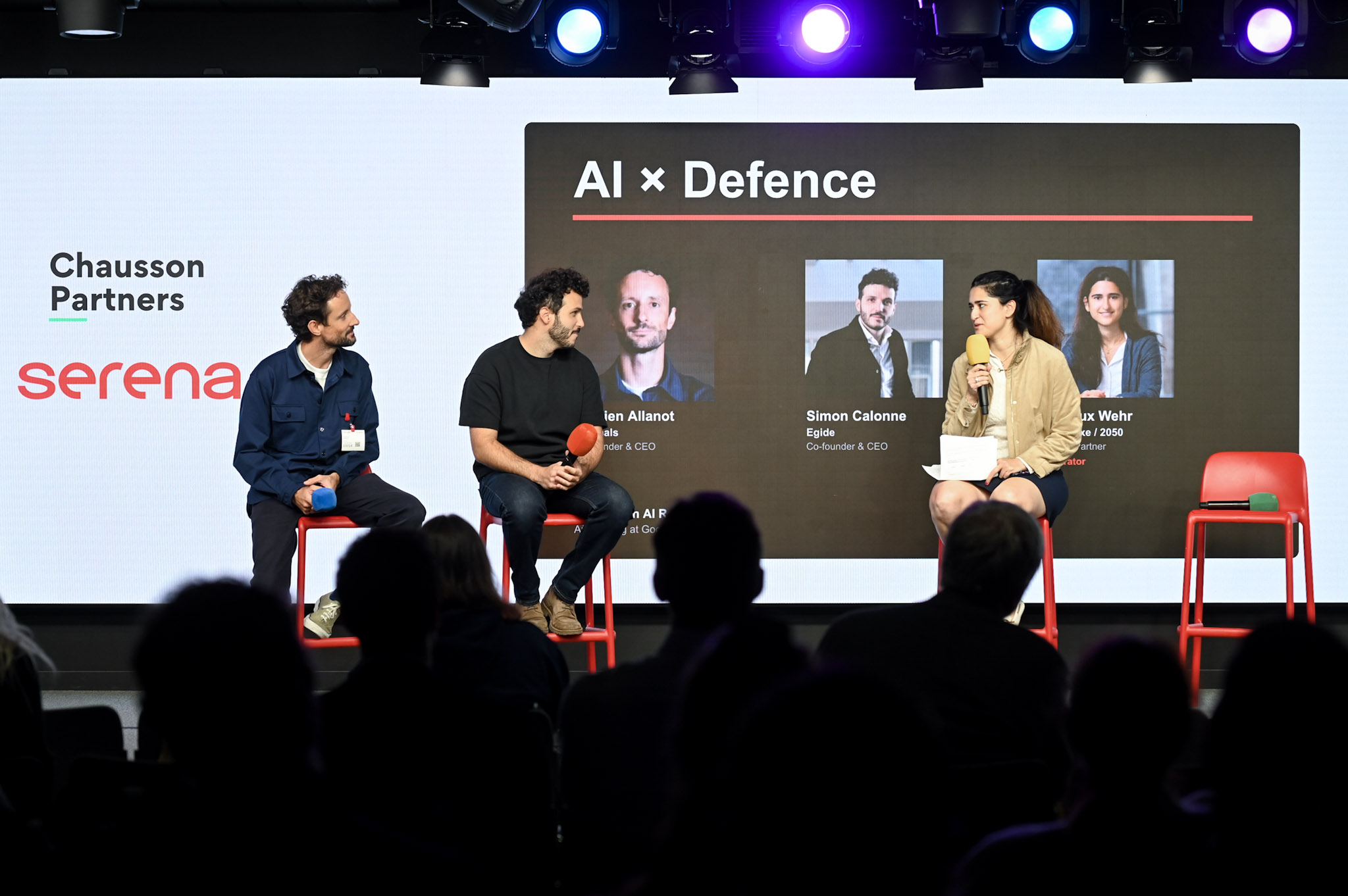
Margaux Wehr of Galion.exe moderated Simon Calonne of Egide and Bastien Allanot of Arsenals AI. The figures assembled for the evening put French AI defence startup funding at €272 million in 2025, up from €17 million in 2024: a sixteenfold increase within the report’s scope. These are startup financing figures, not defence budgets. The harder question is how that capital becomes equipment that can be delivered and maintained.
3.1. Civilian technology changes the cost and pace of development
Civilian technology brings a different cost structure and development pace into defence. Commercial electronics, computing and software tools allow teams to reuse capabilities developed for much larger markets. Egide’s counter drone work illustrates the economic pressure behind this shift: equipment must remain affordable when cheap threats appear in large numbers. Military reliability still has to be demonstrated, but development can start from an existing industrial base rather than a bespoke component for every function.
Hardware and software have to be designed as one product. For naval systems such as Arsenals’, endurance, sensors, onboard computing and maintainability constrain one another. Software can extract more value from affordable hardware, while physical limits determine what the software can achieve. The customer buys a usable capability, so production, integration and upkeep belong in the cost calculation from the start.
Hardware can be easier to sell to a military customer than software alone. For Egide, an integrated piece of equipment can fit procurement expectations more readily than a standalone software purchase. For a founder, the product boundary is therefore a commercial decision as well as an engineering one. Packaging software within a complete system can make its value easier to buy.
3.2. Military automation predates generative AI
The military did not wait for generative AI to build sophisticated automated systems. Radar processing, target acquisition and missile guidance have decades of engineering behind them. DARPA’s history of Pave Mover and Joint STARS, for example, traces radar target acquisition work to the 1970s. These systems draw on signal processing, control and, in some cases, machine learning; treating all of that as a recent GenAI breakthrough obscures what is actually changing.
The current opportunity is to make perception, onboard autonomy and coordination more capable and more widely deployable. The discussion distinguished processing observations locally, combining sensor data into a coherent picture, and helping people coordinate systems and resources. Onboard computing matters particularly where a continuous connection cannot be assumed. Civilian advances in computing and vision can now feed into these established military problems.
Getting into the field early is essential, but an unreliable first deployment can cost a team its users’ trust. That tension is particularly acute in Ukraine: laboratory tests cannot reproduce every operational constraint, while operators have little time to nurse an immature product. Teams need enough readiness to be useful and enough contact with users to discover what still fails. Pretrained models and synthetic data can accelerate development; the harder work is turning field feedback into reliable revisions without adding to the operator’s burden.
3.3. Rebuilding depth means rethinking doctrine
Rebuilding military depth means sustaining a force over time and across the whole area in which it operates. Reserves, logistics, repair capacity, replacement equipment and industrial supply determine whether it can absorb losses and maintain a presence. Depth also requires complementary means at different ranges, with different combinations of mobility, protection, payload and firepower. A few excellent systems cannot cover all those roles.
Drones change the place of armour within a force; they do not remove the need to take and hold ground. The lesson is combined arms: coordinating reconnaissance, infantry, armour, fires, engineering and protection so that each compensates for the others’ limits. It is too simple to imagine drones opening the terrain and tanks following once it is safe. The balance changes with the threat and the mission, as analysis published by RUSI describes. For fleets and land forces alike, buying new platforms requires changes in organisation, training and support, not just equipment.
Nuclear deterrence cannot be treated as an absolute shield against every form of coercion. Salami tactics mean pursuing a larger strategic objective through successive limited moves, each judged too small, ambiguous or costly to reverse to trigger a decisive response. An unchallenged move becomes the starting point for the next: the cumulative loss can be substantial even when no single incident appears decisive. Russia combines political interference, cyber operations and economic coercion with military intimidation and armed aggression against its neighbours, including Georgia and Ukraine. Its seizure of Crimea and intervention in eastern Ukraine in 2014 were followed by the full invasion of Ukraine in 2022. Incremental pressure can exploit hesitation and divisions, but it can also give way to open war. Conventional forces and proportionate responses remain necessary alongside nuclear deterrence.
Military capability is one pillar of a much broader geopolitical response. Diplomacy, trade policy, sanctions, investment in critical industries, scrutiny of foreign investment, export controls and regulation all shape the costs of coercion and the dependencies an adversary can exploit. These levers need to work together. A response to incremental pressure need not use the same instrument as the provocation, but it must address the cumulative campaign rather than treating each incident in isolation.
Sovereignty depends on the ability to produce, adapt and replenish equipment. Control of critical technology, dependable suppliers and repair skills all contribute to that ability. European industrial partnerships can help build it. New entrants must also work with existing fleets and contractors, because new capabilities have to strengthen forces that are already in service.
Repeat orders turn technical promise into industrial capacity. Trials provide feedback; sustained demand supports production lines, hiring and maintenance. France’s DGA (Direction générale de l’armement), its defence procurement and technology agency, and other European customers matter for that reason. For an investor, the test is whether the company can convert operational learning into a better product, secure follow on orders and deliver at a sustainable cost.
4. What I took away
The relationship between general and specialised models remains central to AI discussions. The evening returned repeatedly to the question I explored in general versus specialised models: as general models improve, where does specialised knowledge still produce better outcomes? In health, that advantage may come from experimental data, imaging expertise and integration into care. In defence, it includes operation under physical constraints and experience gained in the field.
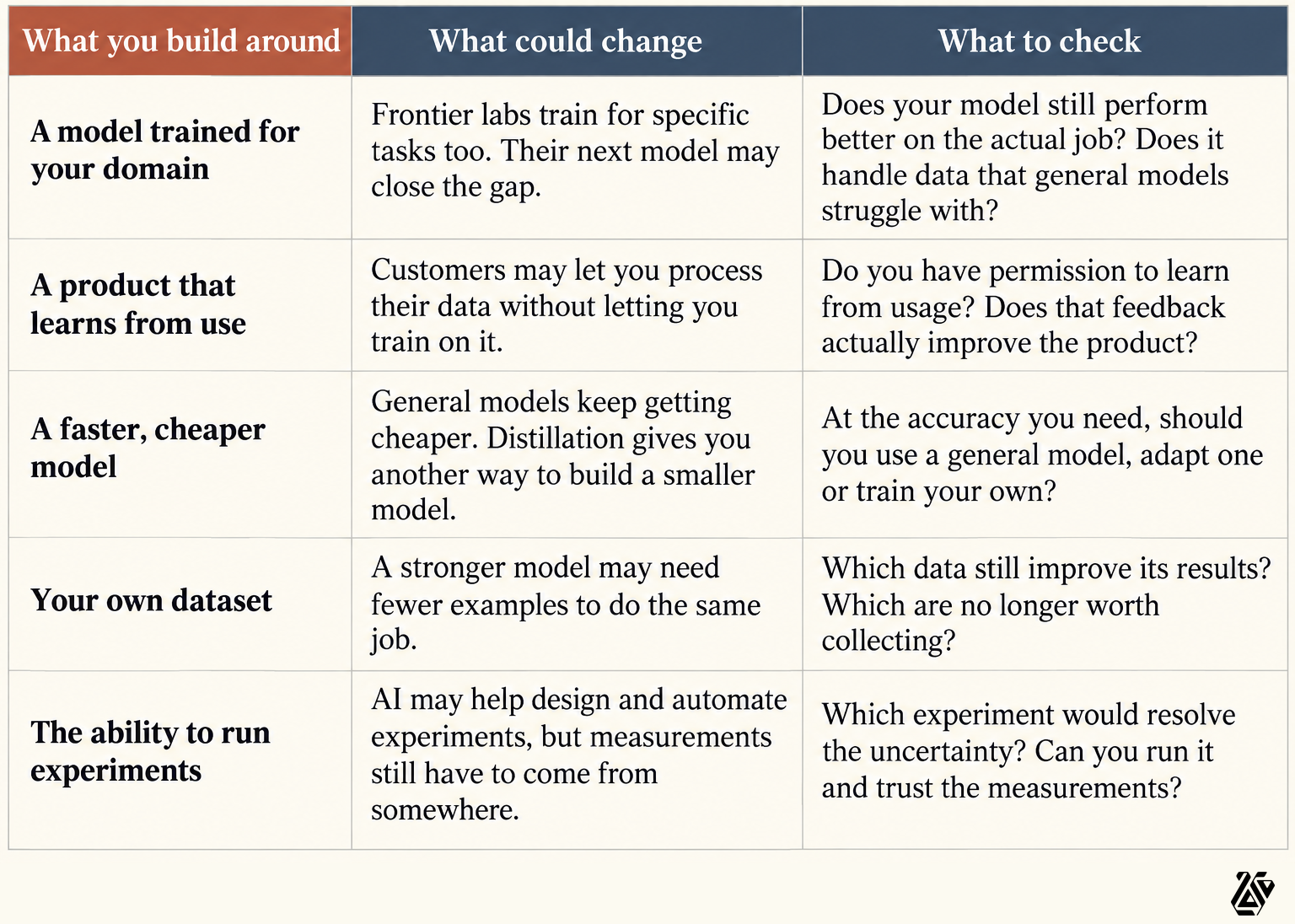
The ability to generate evidence gives companies a way to keep improving. Orakl’s drug response experiments, DeepLife’s perturbation data, Raidium’s work with clinical workflows and the defence companies’ field trials each test whether a product works where it is needed. The company has to be organised to learn from those tests, and funded long enough to act on them.
What excites me is how much remains unsettled between general models and specialised expertise. As models improve, which work moves into them, and which stays in the surrounding systems? Agent harnesses connect models to tools, data and actions; evaluation harnesses establish whether the resulting system actually does the job. How much of that work will become standard infrastructure, and how much will still depend on knowing the science and the task?
I am especially interested in what we can discover by bringing these capabilities together:
-
AI and robotics can connect predictions to experiments, automate parts of the work and use the results to guide the next test.
-
Genomics and synthetic biology expand what we can read and engineer in living systems. Living Models illustrates the connection: its BOTANIC models learn directly from plant DNA to help identify functional regions and assess genetic variants. The aim is to guide which changes are worth testing, connecting genomic predictions to experiments in crop improvement and biological engineering.
-
Materials science and physical engineering connect the properties we want to the substances, structures and devices we can actually make.
-
Nature supplies a vast diversity of molecules and biological machinery. Generare turns unexplored microbial biosynthetic instructions into molecules that can be produced and screened for drug discovery. EPICS Biotechnology uses protein engineering and gene editing to develop plants whose seeds produce bioactive compounds for crop protection.
I think we may be on the verge of a new renaissance of knowledge. As these capabilities come together, we can ask questions and run experiments that were out of reach a few years ago. That is an extraordinary prospect for builders and venture investors: more science to explore, more companies to build, and more choices about which problems deserve our time and capital. Choosing what is worth building becomes even more important as more things become possible. We have no shortage of challenges in health, energy, food, industry or security. We should not get bored.
The moderation was outstanding. Strong kudos to Heba Hitti, Thaïs Walter and Margaux Wehr for their precise questions and thoughtful follow ups that made these discussions so useful. Thank you to Laurence Hémery, Sébastien Le Roy, Jonathan Baptista, Fanny Jaulin, Pierre Manceron, Simon Calonne and Bastien Allanot for sharing their experience with us.

A few weeks ago, 2050 took over the management of Galion.exe Origin, the fund we built at Galion.exe. I am now leading an initiative at 2050 to explore what makes AI fertile: how it can help advance science and improve the essential systems we depend on. This journal entry and the event we organised are part of that work. We are sharing our research, conversations with researchers and builders at the forefront of AI, and the open questions behind our upcoming investment strategy so that others can use them, challenge them and contribute. I contributed to the report and took part in the opening panel.
View the full photo album on Lightroom
Read the full report and explore the open database of French venture backed AI native startups →
The evening’s programme lists the sessions and participants.
Conceptual Toolbox
| Concept | What it means | Why it matters |
|---|---|---|
| Hard AI | AI developed alongside experiments, physical systems or scientific evidence | Capital must fund the work between a model result and a usable product |
| Talent flywheel | Founders, operators and angels reinvesting experience, networks and money in new companies | Champions can strengthen the broader ecosystem |
| Organoids | Small tissue cultures grown from cells that reproduce some features of the original tissue | They let researchers measure drug responses in the laboratory |
| Perturbation data | Measurements taken after deliberately changing a biological system | They help test how an intervention changes a cell, beyond observing its starting state |
| Molecular selectivity | How preferentially a molecule acts on its intended target | Fewer unwanted interactions can help safety, but do not replace toxicity testing |
| Single cell analysis | Measuring individual cells rather than averaging a tissue | It reveals differences that can matter for treatment choice |
| General versus specialised models | Broad capabilities compared with expertise developed for a particular task or domain | A specialist must keep improving as the general alternative improves |
| Agent and evaluation harnesses | Systems that connect models to tools and actions, and test whether the whole system works | Model capability alone does not establish reliable performance on a real task |
| Combined arms | Coordinating different military capabilities so that each supports the others | New equipment changes organisation, training and support as well as procurement |
| Salami tactics | Successive limited moves that cumulatively advance a larger strategic objective | Responses need to address the cumulative campaign, not only each isolated incident |
Footnotes
-
European funding figures: The French AI Report, pp. 16, 21 and 23, covering 2025 AI venture investment and the change in French seed funding from 2024. Separately, Stanford’s AI Index estimates US private AI investment at $285.9bn in 2025. Its dataset and methodology differ from the report’s European comparison, so these totals should not be used to calculate a direct funding ratio. ↩
-
Dealroom and Prosus, State of AI in Europe, March 2026. The report estimates roughly 900 new AI startups backed by VC per year in each region and comparable pools of around 325,000 AI professionals. Its 2025 funding comparison is $12bn in Europe versus $141bn in the US at later stages, against $4bn versus $5bn at early stages. These are European and US estimates, not French startup creation figures. ↩
-
The timelines are company benchmarks reported by Insilico Medicine for the discovery stage, not the full journey to an approved medicine. ↩
-
For background on why effects on the intended target can still cause harm, see target safety assessment research. ↩